To Know, Worship & Love (KWL) has launched some new chapters for the Third Edition of Year 10.
This current release of Year 10 material incorporates a streamlined Core Content for each topic, limited to 3,000 words. Additional content for each chapter can be accessed via designated buttons. This enables teachers and students to focus on the key elements of each unit and then choose to explore extension activities and additional content as needed.
Year 10 – Available Third Edition Content
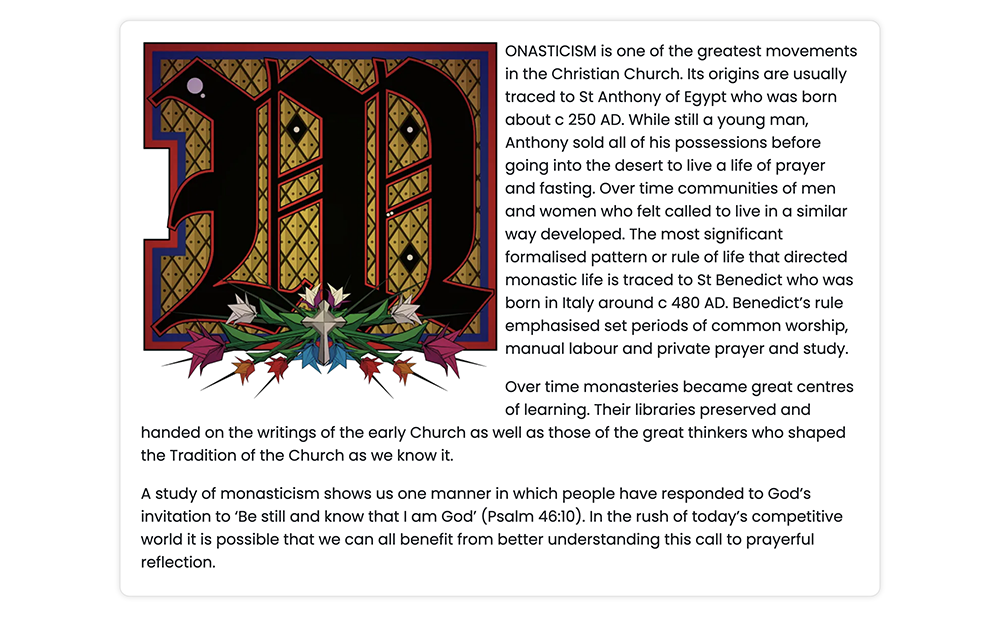
Chapter 5: Monasticism
Overview:
Traces monastic history from desert fathers to modern religious life, exploring monastic spirituality, community life, and contributions to education, culture, and contemporary Catholic practice.
What’s inside:
5.1 A Balance of Work and Prayer
5.2 Three Types of Prayer
5.3 Nuns and Monks: The Work of Praising God
5.4 The Buildings in a Monastery
5.5 Hospitality and Alms Giving
5.6 Tasks in the Monastery
5.7 Modern Monasticism
5.8 Oblates
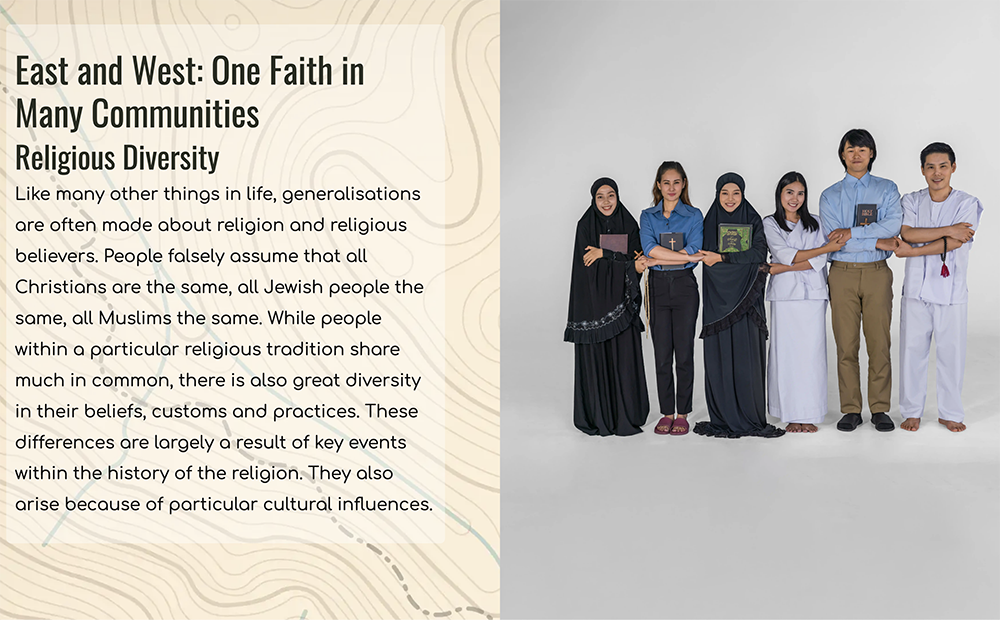
Chapter 6: East and West
Overview:
This chapter explores the origins of the Christian story in the life of Jesus and in the early years of growth and persecution in the Church. \nIt also notes the issues of Eastern and Western tensions through the centuries and the recent attempts at reconciliation.
What’s inside:
6.1 Religious Diversity
6.2 Christianity
6.3 Moving away from Judaism
6.4 Church and State
6.5 Questions About the Closeness of Church and Government
6.6 Unity Between East and West
6.7 Differences Between East and West
6.8 The Argument over Papal Authority
6.9 Reconciliation and the Hope of Unity
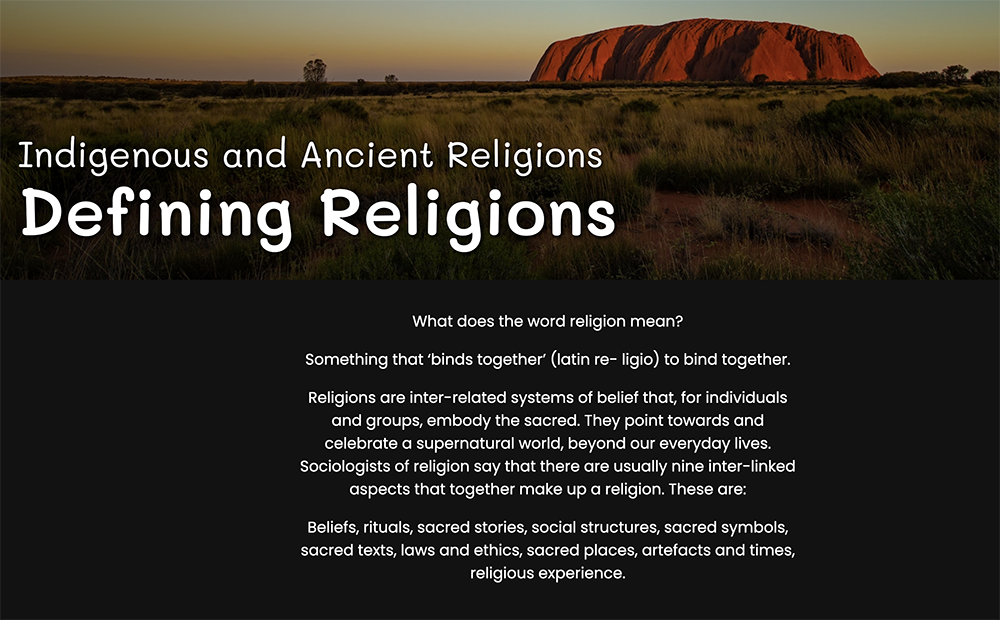
Chapter 7: Indigenous and Ancient Religions
Overview:
This chapter explores the key elements of a religion and notes that these as found in the Aboriginal and Torres Strait Islander peoples. It also cites some ancient religions as a well as North American and Melanesian examples.
What’s inside:
7.1 Defining religions
7.2 Aboriginal and Torres Strait Islander religions
7.3 Beliefs in Aboriginal and Torres Strait Islander religions
7.4 The Dreaming in Indigenous religions
7.5 Aboriginal and Torres Strait Islander rituals
7.6 Sacred Objects and Art
7.7 Other indigenous religions
7.8 Melanesian religions
7.9 Ancient religions
7.10 The Big Questions of Life
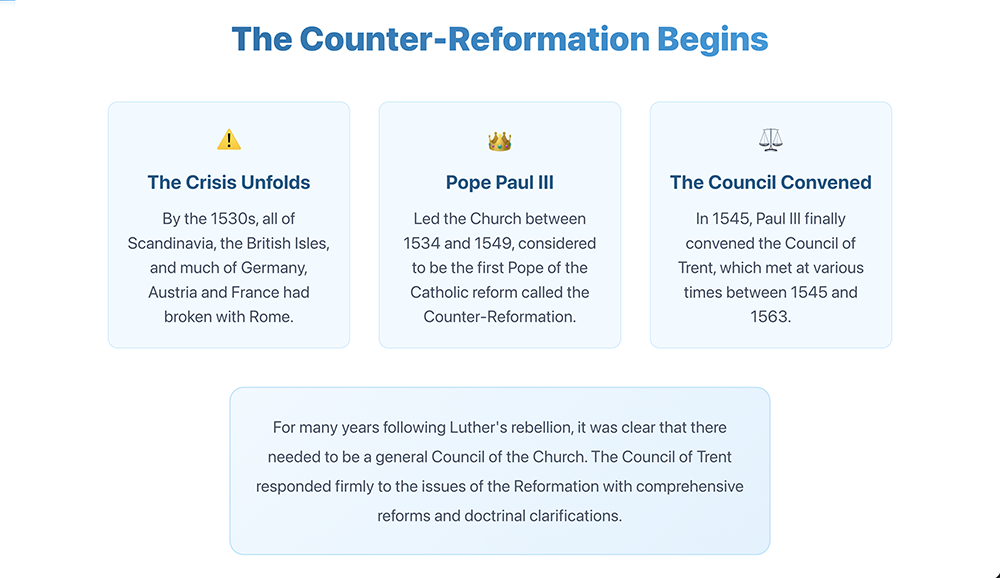
Chapter 8: The Reformation and Catholic Reform
Overview:
Explores religious and social change in late medieval Europe, the Reformation associated with Martin Luther, and the Catholic Reform through the Council of Trent, the Jesuits, and Carmelite saints.
What’s inside:
8.1 The Challenge of Change
8.2 The Black Death
8.3 Who was Martin Luther?
8.4 What was Martin Luther Really Saying?
8.5 How did the Catholic Church Respond?
8.6 Saints and Leaders of the Catholic Reform
8.7 The Role of the Jesuits
8.8 St John of the Cross
8.9 St Teresa of Ávila
Chapter 9: Conscience
Overview:
Explores the nature and development of conscience in Catholic moral teaching, examining how conscience matures, the role of Church teaching, the Ten Commandments, Beatitudes, and theological and moral virtues in Christian decision making.
What’s inside:
9.1 Introductory Questions
9.2 Conscience: a Definition
9.3 It’s Easy to Go Wrong
9.4 Conscience Matures
9.5 An Informed Conscience
9.6 How Can We Find Out About Catholic Teaching on Moral Issues?
9.7 The Ten Commandments and the Beatitudes: Reflective Writing
9.8 A Case Study
9.9 Other Sources of Inquiry: the Theological Virtues
9.10 Moral Virtues
9.11 Finding Out What the Church Teaches
9.12 Putting it All Together: Christian Decision Making

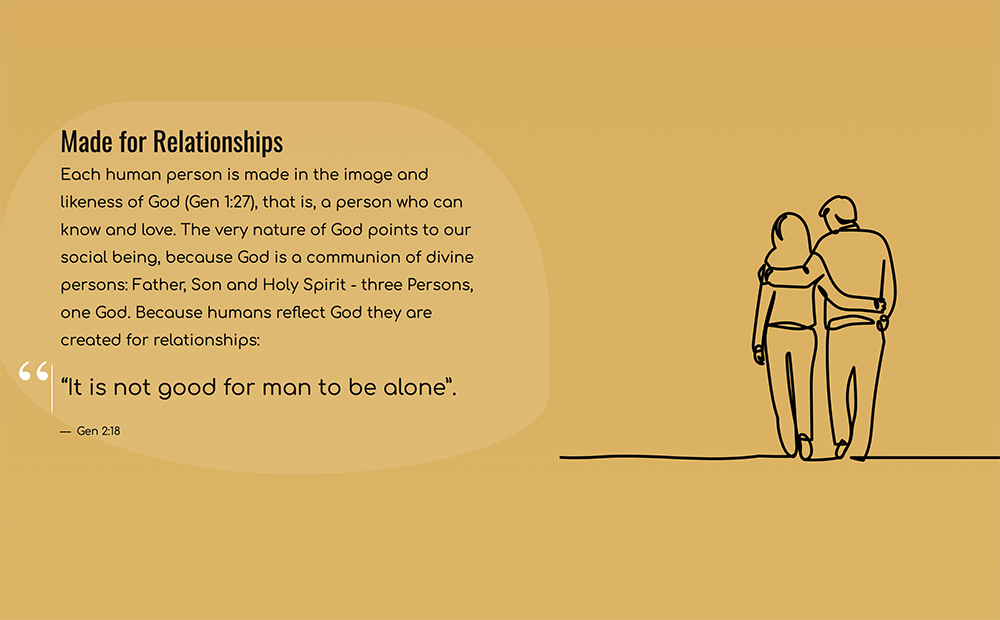
Chapter 10: In Right Relationship
Overview:
This chapter looks at the importance of good relationships in human life. It presents the Catholic teaching on sexuality and marriage and explores some key questions this important topic raises.
What’s inside:
10.1 The Importance of Relationships
10.2 Good Friendships
10.3 Sexuality and Sexual Attraction
10.4 When Things Go Wrong
10.5 Catholic Teaching About Sexuality
10.6 Catholic Teaching About Marriage
10.7 To Love One Another
Chapter 11: Values and Drug Abuse
Overview:
Examines values formation and the challenges of drug and alcohol abuse from a Catholic moral perspective, exploring Church teaching on caring for the body and making responsible choices.
What’s inside:
10.1 Learning Values
10.2 Drug Abuse
10.3 The Dangers of Vaping
10.4 What Does the Church Have to Offer?
10.5 Young People and Alcohol: One Specific Type of Drug
10.6 A Christian Approach to Alcohol

Chapter 12: Kingdom of God's Love
Overview:
This chapter introduces the seven elements of God’s Kingdom: Truth, Life, Holiness, Grace, Justice and Peace. This chapter also presents the five elements of Holiness as outlined by Pope Francis.
What’s inside:
12.1 Truth
12.2 Life
12.3 Holiness
12.4 Grace
12.5 Justice
12.6 Love
12.7 Peace
Chapter 13: Caring About Our World
Overview:
Surveys Catholic social teaching from Rerum Novarum to Laudato Si’, examining papal encyclicals on justice, peace, environmental care, and key principles like human dignity and solidarity.
What’s inside:
13.1 Caring for Humanity
13.2 One Hundred Years of Teaching
13.3 Pacem in Terris: A Closer Examination
13.4 Pacem in Terris: Human Rights and Duties
13.5 A Just Society
13.6 John Paul II, 1991: Centesimus Annus
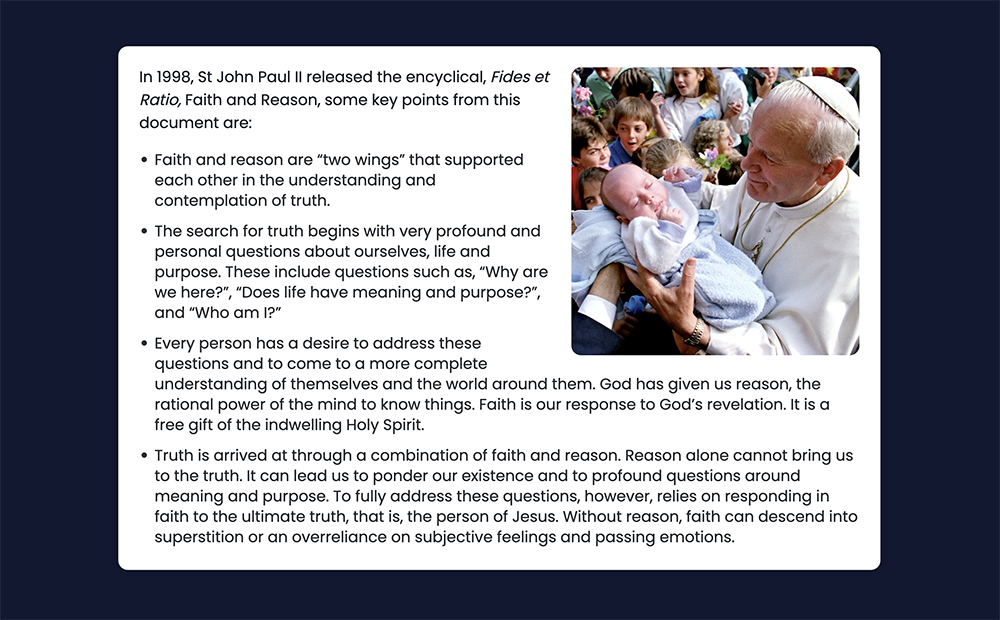
Chapter 14: The Church in the Third Millennium
Overview:
Examines recent papal leadership from Vatican II through Pope Francis, highlighting each pope’s contributions to Church renewal, pastoral approaches, and responses to contemporary challenges.
What’s inside:
14.1 Pope St John Paul II
14.2 Pope Benedict XVI
14.3 Pope Francis
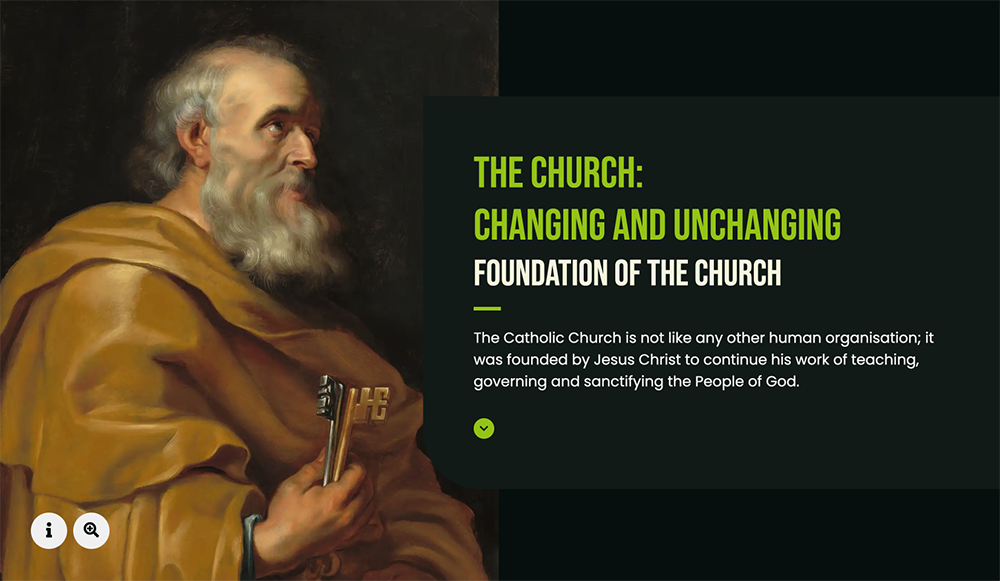
Chapter 15: The Church: Changing and Unchanging
Overview:
Explores the Church’s unchanging foundation and teaching mission alongside its renewal through the Second Vatican Council, the role of the laity and its continuing mission in the world.
What’s inside:
15.1 Foundation of the Church
15.2 The Teaching Church
15.3 The Changing Church
15.4 Importance of Vatican II
15.5 Goals of the Council
15.6 Documents of Vatican II
15.7 The Role of the Laity
15.8 Vatican II and Mission
Chapter 16: The Eucharist
Overview:
Explores the significance of the Eucharist from its roots in the Jewish Passover through the Early Church, the Middle Ages, the theology of Real Presence, and its renewal at the Second Vatican Council.
What’s inside:
16.1 The Significance of the Eucharist
16.2 The Story of Passover
16.3 The Eucharist and Passover
16.4 The Eucharist in the Early Church
16.5 The Breaking of the Bread in the Early House Churches
16.6 The Eucharist in the Middle Ages
16.7 What is the Real Presence?
16.8 The Eucharist and the Second Vatican Council

Chapter 17: The Persecution of Christians
Overview:
Explores the meaning of Christian persecution from its earliest evidence through the suffering of Jesus, and considers the guidance Jesus gives to the persecuted to take up their cross and remain faithful.
What’s inside:
17.1 Introduction
17.2 The Persecution of Jesus Christ
17.3 The Guidance Jesus Gives to the Persecuted
17.4 Jesus’ Transformation of Persecutors
17.5 Persecution from Within the Church

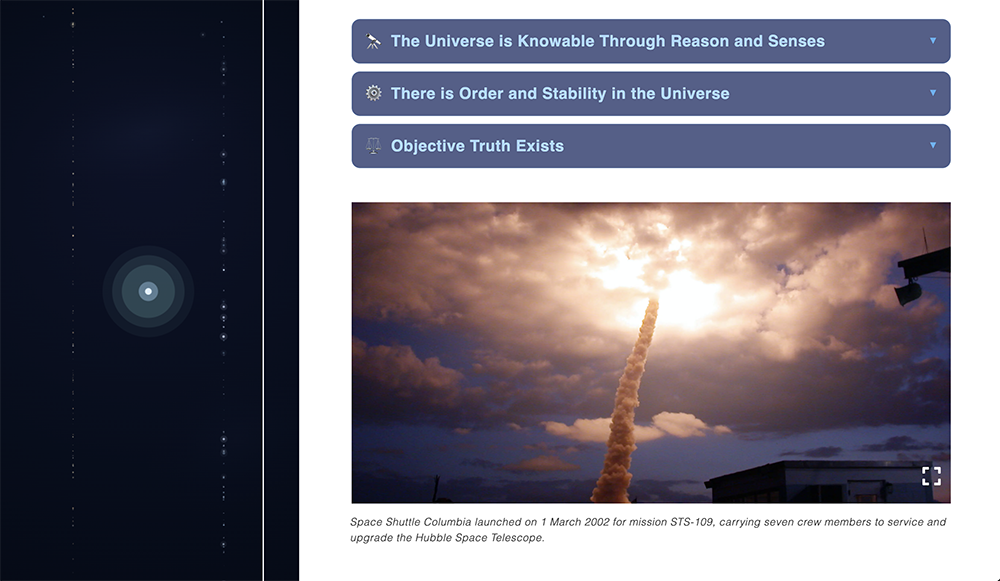
Chapter 18: Science and Religion
Overview:
This chapter examines how science and religion each offer different ways of understanding reality, exploring their distinct objects, methods and teachings. It also traces the historical conflict between the Church and Galileo over heliocentrism, and how that relationship has since been reconciled.
What’s inside:
18.1 Ways of Knowing the World
18.2 Ways of Understanding Reality
18.3 Religion, Science and Conflict
18.4 Galileo and the Church
Can’t see the new content?
The new content is now available as a preview to all secondary students and staff. If you are unable to locate the new content, please log out and log back in. If you are accessing KWL on an iPad, please update the app via the Apple App Store.